
What Are Football Jerseys Made Of? Fabric Types Compared
Football jerseys are made of polyester: 100% polyester, or polyester with a small share of elastane for stretch, knitted lightweight and often vented with mesh panels. Polyester wicks sweat, dries fast, keeps its shape and holds sublimated colour. Cotton is for fan shirts, not matches. MOMUTO kits use a 92% polyester, 8% elastane blend (145-160 GSM, micro-interlock, four-way stretch) as standard.
Search for "type of fabric football jerseys" and you get a mix of fan-shirt advice and sportswear jargon. Here is the plain version, from a team that makes sublimated kits every day: what each fabric is, what it does on the pitch, and which one to pick for your team.
The short answer: it is polyester
Polyester is a synthetic fibre that does not absorb water the way cotton does. Engineered yarns and knit structures pull sweat away from the skin to the outer surface of the fabric, where it evaporates. That is what "moisture-wicking" means, and it is why polyester replaced cotton and heavier synthetics in professional and competitive kits across football, basketball, rugby, hockey and most other team sports.
- Wicks and dries fast: much quicker than cotton, so the shirt stays light when you sweat.
- Light and durable: resists abrasion and keeps its shape after repeated washing.
- Colourfast and print-friendly: dye-sublimation bonds into polyester fibres, which is what makes full-colour patterns, gradients and names possible without anything that can peel.
- Low shrinkage: stable sizing from the first wash to the last.
- Cost-effective at team quantities: which is why a full kit can cost less than a branded replica shirt.
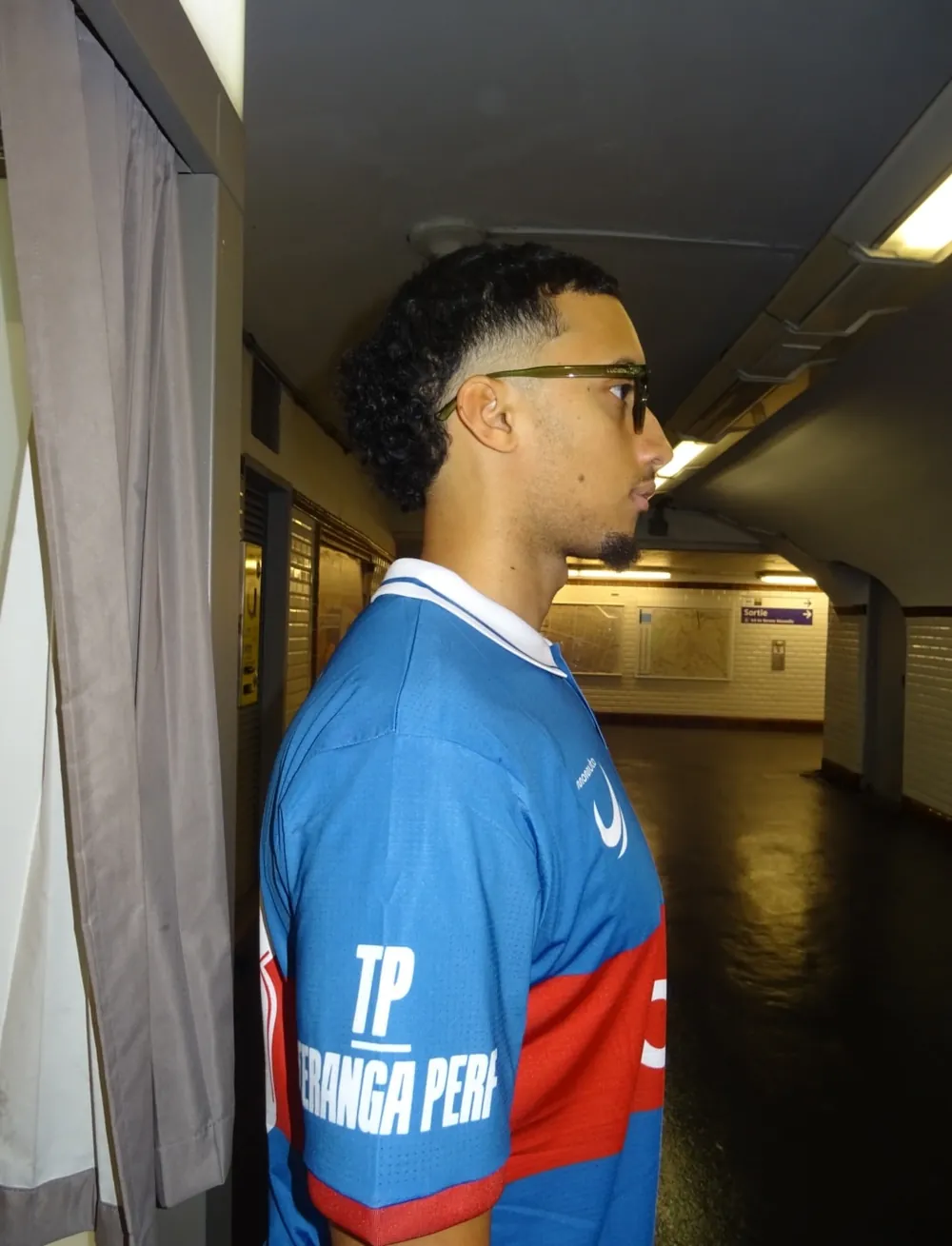
The main fabric types compared
| Fabric | Strengths | Weaknesses | Best for |
|---|---|---|---|
| 100% polyester knit | Wicking, durability, print quality, price | Less stretch and recovery; can feel plain without a good finish | Match jerseys and most team sports |
| Polyester + elastane (small share) | Stretch and recovery, a closer athletic fit | Slightly higher cost; too much reduces breathability | Fitted cuts, collars, sports that need mobility |
| Polyester mesh | Maximum airflow | Less opaque; very open meshes snag more easily | Hot climates, vented panels, basketball and training tops |
| Double-knit / heavier polyester | Sturdy, opaque, good for bold graphics | Less breathable | Throwback styles and contact sports |
| Nylon and nylon blends | Very high abrasion resistance, smooth feel | Sublimation is built for polyester, not nylon; often less breathable | Reinforcement panels, some training wear |
| Cotton and poly-cotton | Soft when dry | Absorbs sweat, heavy and slow to dry, shrinks and fades more | Fan shirts, casual wear, very light practice |
| Recycled polyester (rPET) | Same performance as standard polyester, lower footprint | Can cost a little more | Teams that want a sustainability angle |
What "GSM" and "knit" mean
Two numbers and one word explain most of the difference between a cheap shirt and a good one.
- GSM (grams per square metre) is the fabric weight. Match shirts commonly sit around 130-165 GSM depending on the maker: lighter weights breathe more, mid-weights balance durability and feel. Our own kits use 145-160 GSM.
- Knit structure matters as much as the fibre. A micro-interlock is a fine, smooth, double-faced knit: it feels soft, looks opaque enough for sublimated prints and still breathes. Mesh is an open knit that trades opacity for airflow.
- Finish: wicking treatments and yarn shape are why two polyester shirts can feel completely different.
Why a little elastane is worth it
Elastane (spandex, Lycra) is the stretch ingredient. Blended into polyester in a small share (ours is 8%), it lets the jersey move with the player and return to shape after every sprint instead of bagging out over a season. It is a trade-off, not a free upgrade: large amounts reduce breathability, which is why sportswear keeps the share small. Many suppliers keep an elastane blend for a premium tier; at MOMUTO a 92% polyester, 8% elastane blend is the standard fabric on every kit. For the full comparison see what separates a premium kit from a generic one.
What the big brands call their fabric
Names such as Nike Dri-FIT, Adidas Climacool and AEROREADY, or Puma dryCELL are brand names for enhanced polyester: engineered yarns, knits and finishes tuned for wicking, faster drying and zoned ventilation. They can feel noticeably better than a basic knit, but the base material underneath is polyester. The takeaway for a team: you do not need a logo to get a fabric that performs. You need a polyester knit with the right weight, the right stretch and decent ventilation.
Fabric by sport
- Football: lightweight polyester, often with mesh panels; sublimation is the standard way to print.
- Basketball: lightweight mesh or double-knit performance polyester for airflow and freedom of movement.
- Baseball: double-knit, mesh or similar textured knits, especially for throwback looks.
- American football: typically heavier polyester knits (interlock or tricot, sometimes with tougher shoulder panels) because of contact.
- Training versus match: training tops can be lighter mesh; match kits balance performance, opacity for prints and durability.
On real teams: the same fabric, photographed by the teams
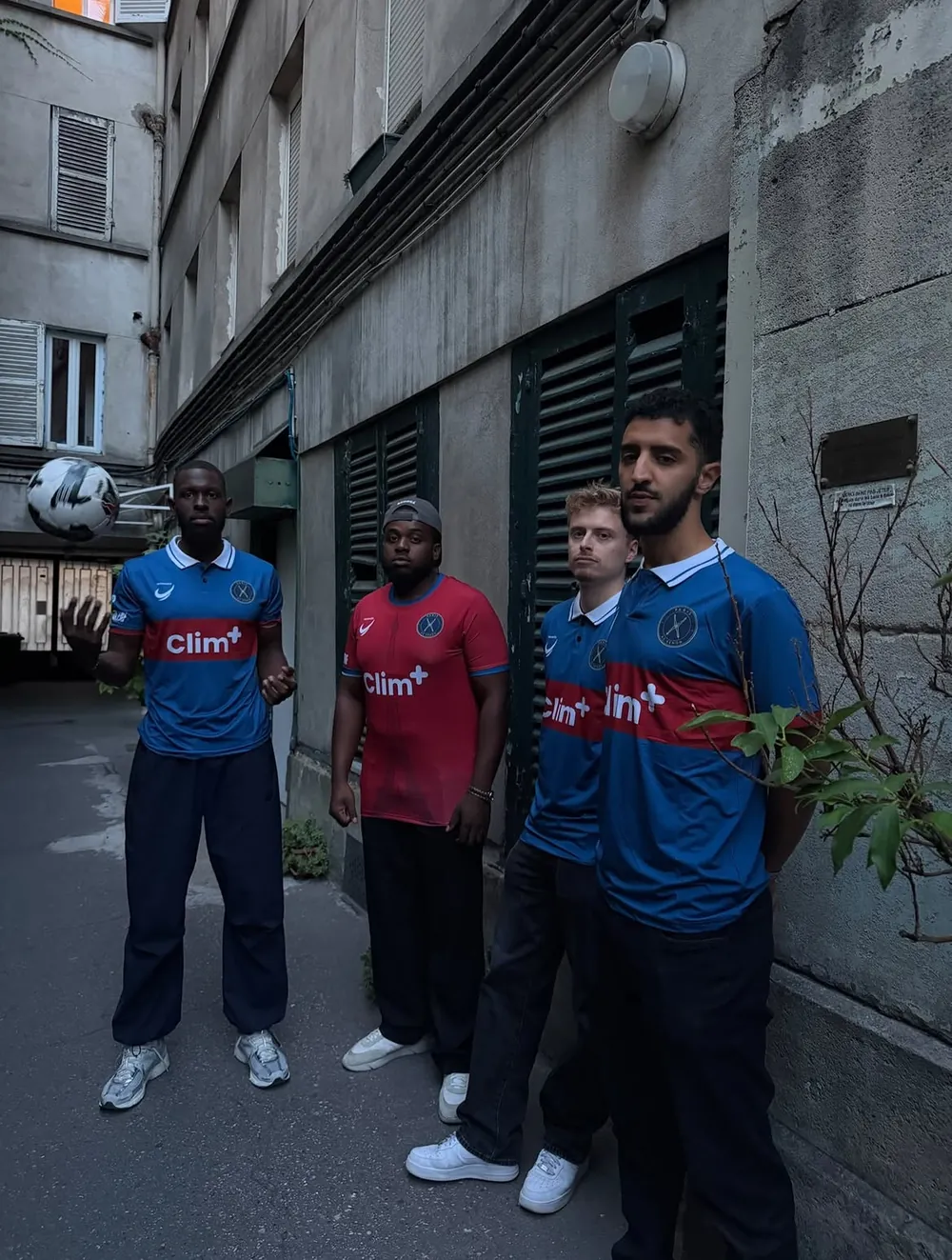
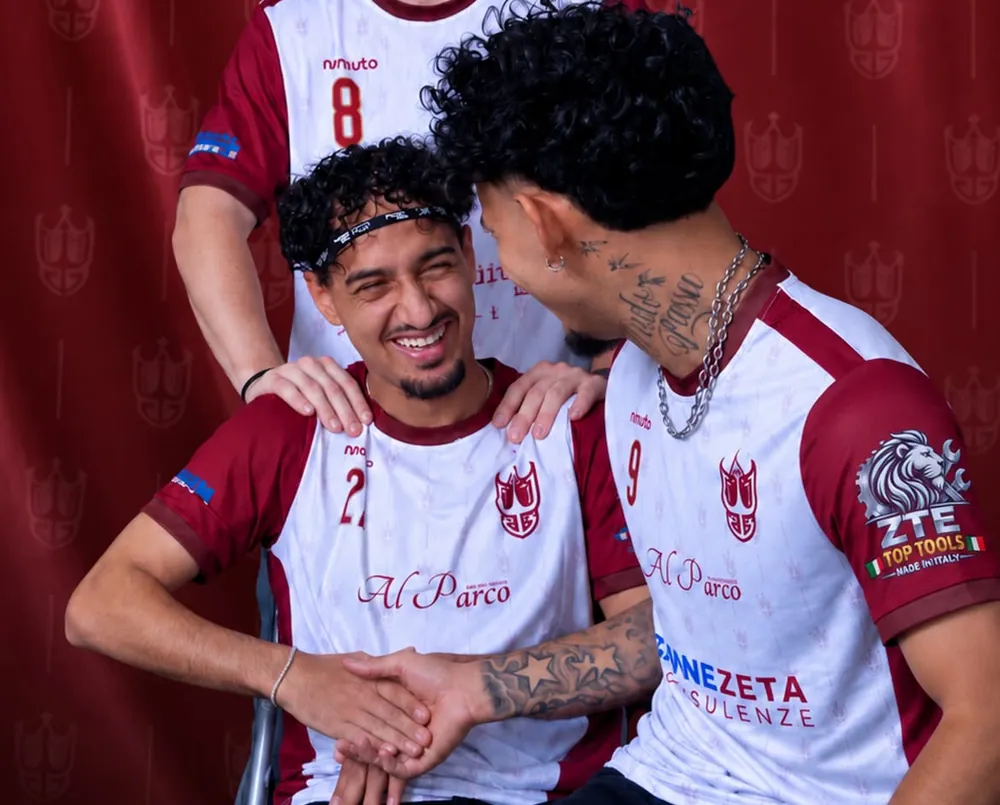
These photos come from two teams we make kits for. AS Xenon, in France, hired a photographer for their own shoot; Far3 FC, in Italy, shows its kit on every match day. Real players, real light, nothing retouched by us.
See the fabric on your own kit
Design a kit in the 3D designer or send us your brief. Free design for teams (€15 deposit, credited in full on orders of 5+ jerseys).
FREE DESIGN FOR TEAMSWhich fabric should your team choose?
- Matches and competitive play: polyester or polyester-elastane with a wicking finish, ideally with ventilation where you run hottest.
- Hot climates or fast indoor sport: prioritise mesh or a lightweight knit.
- Training and casual use: a softer polyester finish is usually enough; poly-cotton only if comfort when dry is the whole point.
- Printed designs: choose polyester. Sublimation is made for it, so the artwork cannot peel or crack.
- Sustainability: recycled polyester performs essentially like standard polyester.
On cost: at MOMUTO a jersey starts at €38.90 for a single piece and from €21.90 each at 10 or more, with the 92/8 polyester-elastane fabric and full dye-sublimation standard at every tier. No minimum order. Production takes 7-12 days and delivery 25-30 days door to door. See the printing and materials page for the technical detail, or read how kits moved from wool and cotton to polyester and why sublimation changed custom sportswear.
Frequently asked questions
What fabric are football jerseys made of?
Almost all modern football jerseys are polyester: either 100% polyester or polyester with a small share of elastane, knitted light and often vented with mesh panels. Polyester wicks sweat, dries quickly, keeps its shape and holds sublimated colour. MOMUTO kits use a 92% polyester, 8% elastane blend of 145-160 GSM with four-way stretch.
Is a cotton football jersey good for playing?
Not for matches. Cotton absorbs sweat, gets heavy and clammy, dries slowly and can shrink and fade. It is fine for fan shirts, casual wear and very light training, where comfort when dry matters more than performance.
What does GSM mean on a jersey?
GSM is grams per square metre: the weight of the fabric. Lower numbers feel lighter and breathe more; higher numbers are sturdier and more opaque. Match shirts commonly sit somewhere around 130-165 GSM depending on the maker and the knit.
Does elastane make a jersey better?
It adds stretch and recovery, so the jersey moves with the body and returns to shape instead of bagging out. A small share is enough; large amounts reduce breathability. That is why it suits fitted cuts and collars, and why our standard fabric is 92% polyester and 8% elastane.
Are Nike Dri-FIT and Adidas AEROREADY different fabrics?
They are brand names for engineered fabrics and finishes, and the base material is polyester in almost all of them. The brands tune the yarn, knit and finish for wicking, drying speed and sometimes cooling.
Can you print a full-colour design on any jersey fabric?
Dye-sublimation, where ink turns to gas and fuses into the fibres, is designed for polyester. That is the main reason polyester dominates custom team kits: full-colour patterns, gradients and names can be printed without a layer that can peel.
Read next: premium versus generic kits · the complete guide to custom team kits.